Can Tesla's Cybercab Make Robotaxis Cheap Enough to Scale?
Driverless taxis already work. Tesla is betting that a cheaper car, fewer sensors and no human driver can turn them into mass transportation.
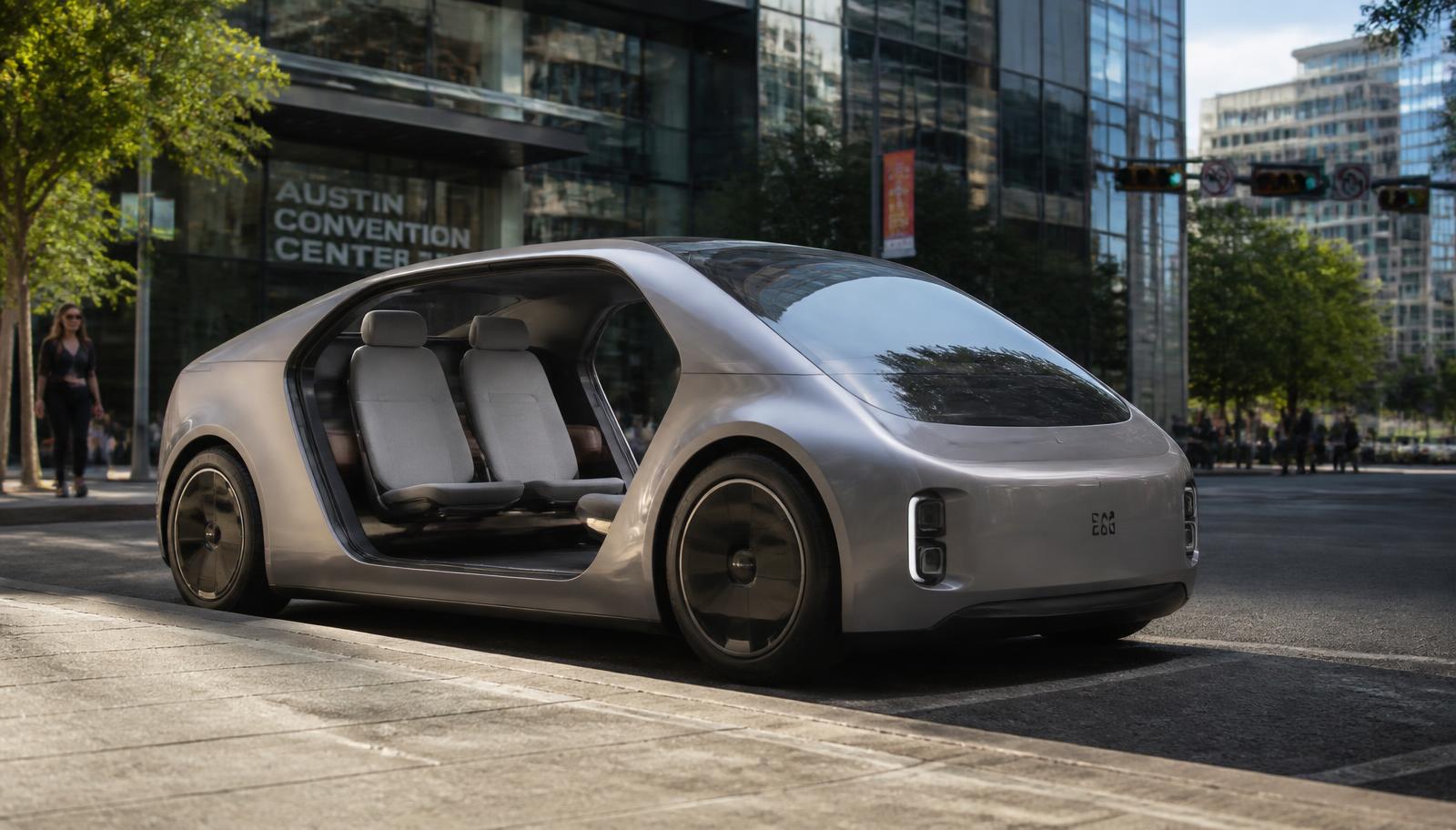
On September 3, Tesla began offering rides in its purpose-built Cybercab in limited parts of Austin, Texas. The two-seat electric vehicle has no steering wheel, no pedals and no conventional driver controls. After years of promises around autonomous driving, Tesla now has something much more tangible on the road.
But the significance of the Cybercab is not that Tesla has proved a car can transport passengers without anyone behind the wheel.
That question has already been answered.
Waymo now operates fully autonomous ride-hailing services across multiple US cities and has accumulated more than 220 million miles without a human driver. The technical possibility of a robotaxi is no longer particularly controversial. The more difficult question is whether autonomous taxis can become cheap and scalable enough to move beyond carefully managed fleets in selected parts of a handful of cities.
That is where Tesla's Cybercab becomes interesting.
When Elon Musk first unveiled the vehicle in 2024, he said it would eventually cost less than $30,000 and could operate at roughly 20 cents per mile. Tesla has also taken a fundamentally different approach to autonomy from many of its competitors. Rather than relying on expensive lidar-heavy sensor systems, its vehicles use cameras and neural networks to interpret the road.
If Tesla can make that work reliably, the advantage could be significant. It would not simply have built another autonomous taxi. It may have developed one that is cheaper to manufacture, easier to produce in enormous volumes and potentially less expensive to operate.
That is the real claim behind the Cybercab.
For that claim to hold up, however, several things need to happen at once. The vehicle must be safe enough to operate continuously without a human fallback. Tesla must be able to produce Cybercabs in numbers that dwarf today's autonomous fleets. The economics still need to work once maintenance, charging, insurance, cleaning and remote assistance are included. Regulators must accept vehicles without conventional driver controls. And passengers need to be comfortable using them.
The Austin deployment provides evidence that Tesla has moved beyond the prototype stage. Cybercab production began during the second quarter of 2026, engineering test drives followed on public roads, and around 45 Cybercabs had reportedly been registered in Texas by the time of the launch.
That matters. A vehicle without a steering wheel operating on public roads is a stronger demonstration than another product reveal or closed-course test.
But it is still only an early demonstration of the system Tesla ultimately wants to build.
Tesla has accumulated enormous amounts of driving data through Full Self-Driving, but much of that experience comes from FSD Supervised. The distinction matters because a human driver remains responsible for monitoring the vehicle and taking over when required. Billions of supervised miles can help train the system, but they do not provide the same evidence as millions of miles driven without anyone sitting behind the wheel.
Waymo provides a useful comparison. Its fleet has accumulated a much larger body of fully autonomous driving data, while the company has reported substantially lower rates of several types of serious crashes relative to human-driver benchmarks.
Tesla therefore enters the robotaxi market with a weaker body of driverless evidence but potentially stronger economics.
That trade-off sits at the heart of the Cybercab strategy.
Waymo has generally pursued autonomy with more sensors, more specialised hardware and significant operational infrastructure around each deployment. Tesla is trying to prove that much of that complexity can be stripped away. Cameras are cheaper than lidar systems. Tesla already manufactures vehicles at enormous scale. Remove a paid driver as well, and the theoretical cost structure begins to look dramatically different from either conventional taxis or more hardware-intensive autonomous fleets.
The problem is that removing hardware does not automatically remove cost.
A robotaxi may not need a driver, but it still needs people and infrastructure behind the scenes. The vehicle has to be cleaned, charged, maintained and insured. It will also spend some of its time driving without a passenger, and when something unexpected happens, such as roadworks, a blocked street or a passenger needing help, remote human support may still be needed.
The economics of Cybercab therefore depend on much more than the cost of the vehicle itself.
Tesla's 20-cent-per-mile ambition could transform the economics of ride-hailing if the company gets close to it. But the Austin launch does not yet tell us what a mature Cybercab network costs when all of the hidden operational infrastructure is included.
Scale raises a similar issue.
Tesla is one of the few autonomous-driving companies for which vehicle manufacturing is unlikely to be the primary bottleneck. The company produced more than 450,000 vehicles in the second quarter of 2026 alone. If Cybercab autonomy were already solved, Tesla possesses industrial capabilities that most autonomous vehicle companies do not.
But autonomous transportation does not scale simply by building more cars.
The driving system itself has to generalise.
A vehicle that performs reliably in selected parts of Austin eventually needs to handle different road layouts, weather, construction, emergency vehicles, driving cultures and countless unusual situations across dozens of cities. Every expansion creates another layer of complexity.
Tesla's camera-led approach could become a major advantage here. If the system genuinely learns to drive more generally rather than requiring extensive city-by-city configuration, Tesla could expand much faster than more geographically constrained robotaxi systems.
But the reverse is also true. If Tesla discovers that reliable autonomy still requires heavy local mapping, remote support or operating restrictions, much of its theoretical scaling advantage begins to disappear.
There are already reasons for caution. Tesla's broader robotaxi rollout has progressed more slowly than some earlier expectations, and real-world testing of its existing service has revealed problems including long waits, cancelled rides and incomplete drop-offs.
None of those issues proves that Cybercab cannot scale. They do show that putting a driverless vehicle on the road and building a dependable transportation network are very different engineering problems.
Regulation adds another layer.
Cybercab's lack of a steering wheel and pedals is fundamental to its design, but US vehicle safety standards were largely written around cars with human drivers. Manufacturers can seek exemptions for vehicles that do not comply with those traditional requirements, but the existing process limits the number of exempt vehicles that can be deployed.
For a company talking about mass production, a few thousand vehicles per year is not meaningful scale.
Rules will almost certainly evolve as autonomous vehicles become more common, and regulators have already begun creating pathways for purpose-built robotaxis. The question is whether regulatory change can move quickly enough to match the scale Tesla wants to achieve.
That will ultimately depend on evidence.
Tesla does not simply need to argue that autonomous vehicles should eventually be safer than humans. It needs to demonstrate that its particular system performs safely enough for regulators to allow enormous numbers of vehicles without conventional driver controls onto public roads.
Passenger adoption may be easier, but the Cybercab itself still makes a notable compromise.
It only seats two people.
For solo commuters and couples, that could make perfect sense. Smaller vehicles can weigh less, consume less energy and potentially cost less to manufacture. But the design becomes less useful for families, airport groups, passengers with large amounts of luggage or people needing more accessible transportation.
That does not necessarily undermine the business model. A large proportion of ride-hailing journeys involve only one or two passengers. But it does mean Cybercab is optimised for a particular kind of trip rather than functioning as a universal replacement for conventional taxis.
The bigger impact, if Tesla succeeds, would come from price.
Human labour has always been one of the largest structural costs in taxi and ride-hailing services. A vehicle capable of operating for long periods without a paid driver fundamentally changes that equation. Fleets could operate for more hours, reposition themselves according to demand and potentially offer individual transportation at costs much closer to public transport than today's taxi fares.
That could improve mobility for people who cannot drive and reduce the need for some households to own multiple cars.
But cheaper autonomous transport could also create more traffic.
If robotaxi rides become inexpensive enough, people may choose them instead of walking, cycling or taking public transport. Empty vehicles travelling to collect passengers would add mileage of their own. A city could theoretically end up with fewer privately owned cars while still experiencing more vehicle traffic overall.
The real impact therefore depends on what Cybercab replaces.
And that is why the Austin launch should be seen as the beginning of Tesla's most important test rather than the conclusion of it.
Tesla has proved that it can manufacture a purpose-built driverless vehicle and put it into limited public operation. What it has not yet proved is the claim that makes Cybercab genuinely disruptive: that autonomy can be made cheap enough, reliable enough and simple enough to spread at Tesla scale.
That remains the central constraint.
If Tesla's camera-led system can achieve extremely high reliability without constant human intervention, almost everything else becomes easier. The company already knows how to manufacture vehicles at scale. A cheaper sensor architecture could strengthen the economics. A growing safety record could make regulation easier. And lower operating costs could drive adoption.
If reliability does not hold up, those advantages begin to unravel. Cheap hardware matters much less if the system requires expensive operational support. Manufacturing capacity matters less if regulators restrict deployment. And a $30,000 robotaxi is not particularly useful if it cannot be trusted to drive everywhere it needs to go.
Waymo has already shown that robotaxis can work.
Tesla is trying to show that they can become ordinary.
The Audit
- Evidence
- Cybercab has moved beyond the prototype stage and is now operating on public roads without conventional driver controls. But Tesla still has a relatively limited body of fully autonomous evidence compared with established robotaxi fleets, and supervised FSD mileage cannot be treated as equivalent to driverless operation.
- Scale
- Tesla has enormous manufacturing capacity and has already begun producing Cybercabs. The harder question is whether its autonomous system can perform reliably across very different cities, roads and conditions without requiring extensive local infrastructure.
- Economics
- A purpose-built vehicle, simpler sensor architecture and removal of the driver create a credible path toward lower operating costs. Tesla has not yet demonstrated that its aggressive cost targets hold once the full economics of maintaining and operating a large autonomous fleet are included.
- Adoption
- Early deployment shows that commercial operation is possible, but regulatory limits, safety scrutiny and the Cybercab's specialised two-seat design could restrict how quickly and broadly the model expands.
- Impact
- If Tesla can make reliable autonomous transport significantly cheaper, the impact on ride-hailing and personal mobility could be substantial. The wider societal benefit will depend on whether robotaxis replace privately owned cars or simply generate more vehicle journeys.
Audit Verdict
Tesla has proved that the Cybercab can leave the stage and enter the road. It has not yet proved the claim that matters most: that robotaxis can be made cheap, reliable and simple enough to scale.
The biggest unresolved question is not whether Tesla can manufacture millions of vehicles. It is whether its cheaper approach to autonomy can achieve the reliability required to let those vehicles drive themselves. If it can, Tesla may have a structural advantage over more expensive robotaxi systems. If it cannot, the complexity it is trying to remove may turn out to be exactly what reliable autonomy requires.
Sources
- Reuters, Tesla starts Cybercab rides in Austin, drawing US safety agency interest, 3 September 2026.
- Reuters, US auto safety regulator says evaluating Tesla's Cybercab rollout, 4 September 2026.
- Tesla, Q2 2026 Update, 22 July 2026.
- Tesla, Second Quarter 2026 Production, Deliveries & Deployments, 2 July 2026.
- Waymo, Safety Impact, 2026.
- Waymo, From the road: Safety data update, 24 June 2026.
- National Highway Traffic Safety Administration, U.S. Transportation Secretary Streamlines Exemption Process for Noncompliant Automated Vehicles, 13 June 2025.
- Reuters, Tesla's sporty two-seater robotaxi design puzzles experts, 12 October 2024.
- Reuters, Musk sounds cautious tone on robotaxis amid slower-than-expected rollout, 23 April 2026.
- Reuters, Tesla's robotaxi rollout features Texas-sized wait times, 12 May 2026.