Is Europe Really Becoming a Defence-Tech Powerhouse?
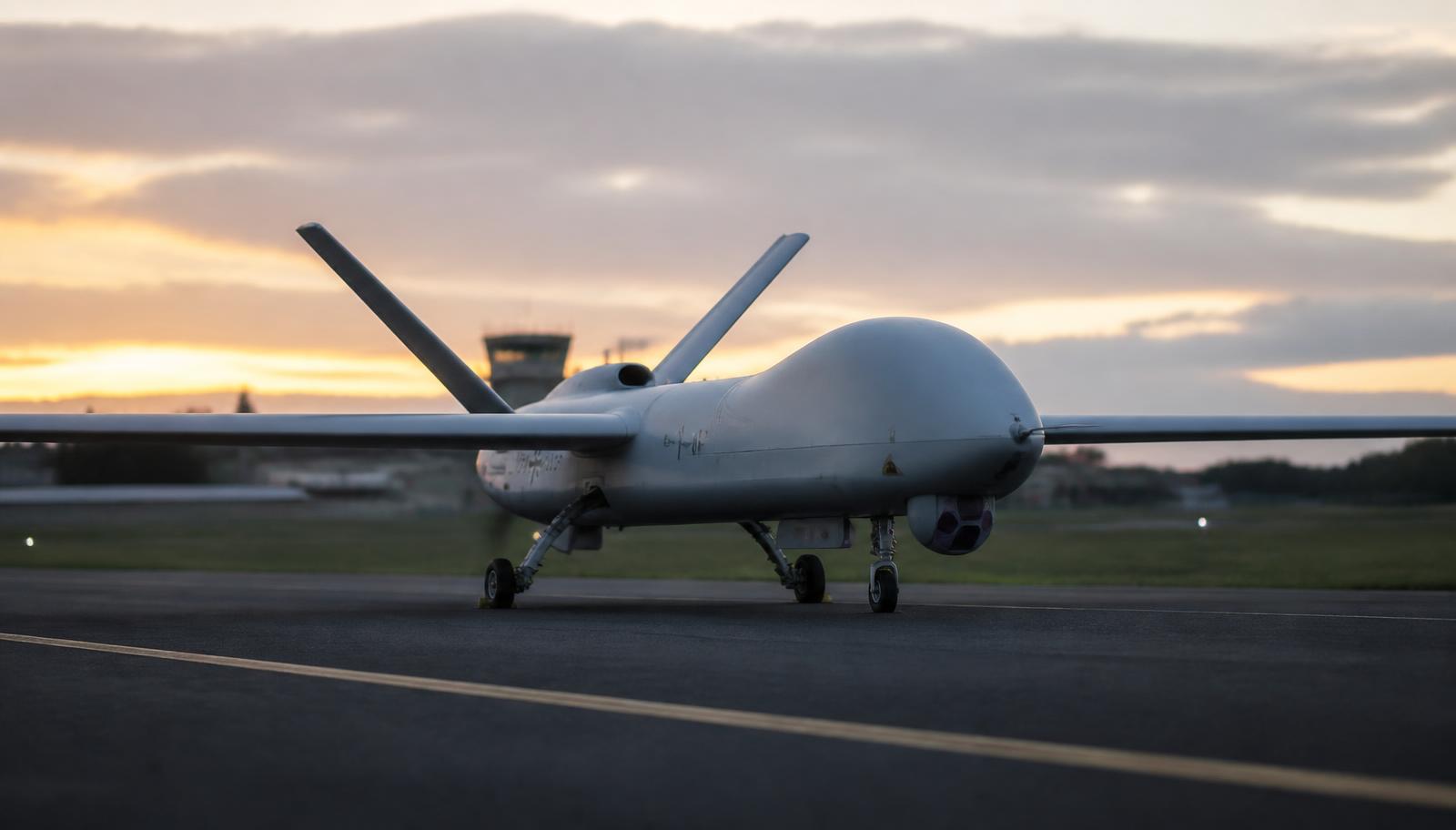
Europe has the money, the startups and increasingly the political will. The harder part is turning all three into military capability at scale.
Something significant has happened to European defence technology.
Only a few years ago, defence was an uncomfortable corner of European venture capital. Many investors avoided weapons altogether, startups struggled to access government customers, and the sector remained dominated by large contractors working on procurement cycles measured in years rather than months.
That landscape now looks very different.
European defence, security and resilience startups raised a record $8.7 billion in venture capital in 2025, 55% more than the year before and almost four times the amount raised in 2020. Defence and security companies now account for a much larger share of European deep-tech investment than they did before Russia's full-scale invasion of Ukraine.
The companies are getting bigger too.
German drone maker Quantum Systems raised $1.2 billion in July 2026 at a valuation of roughly $8 billion, one of the largest private financing rounds ever completed by a European defence-tech company. Less than two weeks later, Munich-based Helsing raised another $1.8 billion at an $18 billion valuation, strengthening its position as one of Europe's most highly valued private technology companies of any kind. Both have moved well beyond PowerPoint concepts. Quantum Systems supplies drones to Ukraine, Germany and other customers, while Helsing has expanded from battlefield AI software into drones, underwater systems and aircraft technologies.
Government spending is moving in the same direction.
The EU's 27 member states spent €418 billion on defence in 2025, 20% more than in 2024, according to the European Defence Agency. Defence equipment procurement alone reached €115 billion. Spending is projected to rise to approximately €454 billion in 2026.
Viewed from a distance, the conclusion seems obvious.
Europe is spending more. Investors are pouring money into new defence companies. Startups are reaching multibillion-dollar valuations. Governments are talking openly about strategic autonomy, rearmament and rebuilding European industrial capacity.
A European defence-tech powerhouse appears to be taking shape.
But that description contains an assumption worth examining.
Because having more defence-tech companies is not the same as having a defence-tech system capable of converting technology into military capability quickly, repeatedly and at scale.
For Europe to become a genuine defence-tech powerhouse, several things need to happen at once.
The technology has to work. Companies have to grow beyond prototypes and small production runs. Governments need to buy what they produce. Orders need to become large and predictable enough to justify factories, supply chains and hiring. Different European countries need to coordinate enough of that demand to create scale. And ultimately, the resulting technology has to reduce Europe's capability gaps rather than simply create valuable companies.
On the first of those questions, the evidence is increasingly difficult to dismiss.
Europe is producing serious defence technology.
The war in Ukraine has accelerated development particularly in drones, autonomy, electronic warfare, battlefield software and other systems where iteration speed matters. European companies are not merely raising capital around a hypothetical future market. Some are supplying systems into active military environments, collecting feedback and modifying products in response.
European institutions are increasingly trying to formalise that learning loop. The EU's BraveTech initiative, developed with Ukraine, now takes European defence technologies into realistic operational testing environments. Its next rounds include autonomous strike drones, swarm systems, electronic-warfare-resistant drones and technologies designed specifically for rapid battlefield adaptation.
This matters because modern defence innovation increasingly behaves differently from the traditional model.
A fighter aircraft can take decades to develop.
Software-defined drones can change between deployments.
Ukraine has demonstrated how quickly battlefield technologies can be adapted when the distance between manufacturer and user becomes short. A successful drone or electronic-warfare system may have only a brief advantage before an opponent develops a countermeasure, which means the ability to improve technology continuously can matter almost as much as the original invention.
Europe clearly has companies capable of participating in that environment.
The capital base supporting them is also becoming substantial.
But the headline investment number contains an important complication.
Of the $8.7 billion raised by European defence, security and resilience startups in 2025, $4.7 billion went into late-stage rounds, more than three times the previous year's amount. Early-stage investment actually fell 10% to $1.1 billion, while the middle "breakout" stage also declined.
That does not undermine the boom.
It tells us what kind of boom it increasingly is.
A relatively small number of companies are becoming very large, very quickly.
That is a sign of maturation, but it is not yet evidence that Europe has built a broad industrial machine capable of repeatedly creating, scaling and procuring new defence technologies.
And defence companies face a problem that most technology startups do not.
Their most important customers are governments.
A consumer technology company can find customers directly. A software company can sell subscriptions to thousands of businesses. Defence companies operate in a market where a small number of ministries, armed forces and government agencies determine which technologies become businesses at scale.
That makes procurement part of the innovation system itself.
A company can have extraordinary engineers, sophisticated technology and billions in private capital and still struggle if governments do not buy quickly enough or in sufficient quantities.
There are striking examples of this tension.
Quantum Systems has become one of Europe's most successful defence-tech companies, yet its path to credibility did not initially run primarily through its home market. The company has described how early backing and introductions from US intelligence-linked investor In-Q-Tel helped it gain access to American government customers before it had strong support from German clients. Today, Quantum Systems is a major German defence player, but its early experience illustrates a longstanding European problem: producing the technology and getting a government to become an early customer have often been two different challenges.
European policymakers increasingly acknowledge this.
The Commission's new AGILE programme is explicitly designed to shorten the route between emerging defence technology and operational deployment from years to weeks or months where possible. BraveTech EU similarly connects startups with military users and battlefield-like testing conditions.
Those programmes are evidence that Europe's innovation system is changing.
They are also evidence of why it still needs to.
The harder structural problem appears when individual national procurement decisions are added together.
Europe may be dramatically increasing defence spending, but it still does much of that spending as separate national markets.
France has its priorities. Germany has its own. Poland has another procurement strategy. Italy, Spain, the Nordics and the Baltic states make their own decisions according to different military requirements, political considerations and domestic industrial interests.
That fragmentation has consequences.
In 2025, only 24% of EU defence equipment procurement was conducted collaboratively, according to the European Defence Agency. That is an improvement, but it remains well below the longstanding 35% collaborative-procurement benchmark. The EU's Defence Readiness Roadmap now aims for at least 40% of procurement to be organised jointly by the end of 2027.
The reason that percentage matters is not bureaucratic.
It is industrial.
Imagine several European countries all decide they need a new drone system.
If each country runs its own competition, establishes slightly different requirements and buys a relatively small number of units, manufacturers end up serving multiple fragmented markets.
If those countries instead agree on requirements and collectively order thousands of systems, the manufacturer receives something much more valuable than a larger contract.
It receives certainty.
That certainty allows it to build factories, order components in larger quantities, expand supply chains, hire workers and reduce unit costs.
Scale in defence therefore does not begin inside the factory.
It often begins with the customer.
The European Commission's own economic analysis estimates that fragmented procurement and reliance on non-EU suppliers may create annual costs measured in the tens of billions of euros. Smaller national orders also limit economies of scale, while larger production volumes can materially reduce unit costs.
This is where Europe's record defence budgets become slightly deceptive.
A continent can spend considerably more without automatically creating a stronger European defence industry.
It depends what the money buys.
And Europe is still buying a significant amount from elsewhere.
SIPRI found that arms imports by European NATO members increased 143% between 2016-20 and 2021-25. Of those imported major weapons, 58% came from the United States. Across Europe more broadly, US arms exports to the region increased 217% between those periods.
Some of that is unavoidable in the short term.
European governments facing immediate security needs cannot simply wait a decade for a domestic alternative to appear. The United States already produces technologies such as combat aircraft and advanced air-defence systems at scale. South Korea and Israel can also provide systems that governments need now.
But this produces a difficult feedback loop.
Europe wants to build domestic defence capacity.
European companies need large orders to justify building that capacity.
Governments facing urgent capability shortages often buy mature foreign systems because European capacity does not yet exist.
And because those orders go elsewhere, European manufacturers lose some of the demand that could have helped create that capacity in the first place.
Money alone does not break that loop.
Long-term procurement does.
That distinction is especially important when assessing the economics of Europe's defence-tech boom.
From an investor perspective, the market increasingly looks compelling. Governments are committing hundreds of billions of euros to defence, strategic demand is unlikely to disappear quickly, and companies such as Helsing and Quantum Systems demonstrate that European defence startups can attract growth capital at a scale previously associated more closely with American technology firms.
But investment capital and customer capital do different jobs.
Venture funding can pay for engineers, research, facilities and product development.
It cannot replace orders.
A drone company does not become an industrial defence company because investors value it at €5 billion or €10 billion. It becomes one when customers repeatedly buy enough systems to sustain large-scale production.
That makes defence unusually vulnerable to what could be called an orders-versus-capacity trap.
Governments may hesitate to place enormous orders with a startup until it demonstrates that it can manufacture thousands of systems reliably.
The startup may struggle to build the factory required to manufacture thousands of systems until governments place enormous orders.
Private capital can bridge part of that gap, and the recent funding rounds show investors are increasingly willing to try.
But ultimately, governments determine whether that industrial capacity has a market.
Europe is beginning to respond to this problem with much larger policy instruments and clearer procurement targets. Its Defence Readiness Roadmap calls for joint purchasing, increased sourcing from the European defence industrial base and contracts sufficient to close priority capability gaps before the end of the decade.
Individual countries are changing too.
Poland, for example, has dramatically expanded defence procurement while increasingly directing spending towards domestic and regional production. Its procurement from Polish and Central European companies has nearly quadrupled since 2022, while it is simultaneously building partnerships with manufacturers across the region.
These are meaningful developments.
But they reveal why the word powerhouse deserves scrutiny.
A defence-tech powerhouse is not simply somewhere with innovative startups.
It is an ecosystem capable of moving repeatedly from:
idea → prototype → military user → procurement → production → deployment
without each successful company having to fight its way through a different maze.
The United States has spent decades building institutions around that process, imperfect as they are. It has enormous defence budgets, large procurement programmes, deep capital markets, prime contractors, military research institutions and a single federal customer system operating at continental scale.
Europe has many of the same ingredients.
It does not yet combine them in the same way.
Europe's national diversity can be an advantage in experimentation. Different militaries can try different technologies, startups can emerge across multiple innovation hubs, and competition can produce different solutions to the same problem.
But when those technologies need to become industrial capabilities, fragmentation becomes much more expensive.
Twenty-seven countries buying twenty-seven slightly different solutions does not necessarily create twenty-seven times more capability.
Sometimes it simply creates twenty-seven smaller production runs.
And that affects the final question in the audit: impact.
There is already clear impact at company and technology level.
European drones, autonomous systems and defence software are being deployed. Startups that barely existed before 2022 are becoming serious industrial companies. Traditional contractors are partnering with, investing in and competing against a new generation of firms. Governments are changing procurement rules and building new mechanisms specifically designed to get technology into the hands of military users faster.
That is not innovation theatre.
Something substantive has changed.
But the strategic claim is larger than whether Europe can produce successful defence startups.
The broader promise is that these companies will help Europe become substantially more capable of defending itself, responding to new forms of warfare and reducing critical dependencies on suppliers outside the continent.
On that measure, the transformation is much less complete.
European defence spending is at record levels, yet important capability gaps remain. European defence companies are attracting record investment, yet imported American systems still play a major role in European rearmament. Startups can now raise billion-dollar rounds, yet European institutions are still building mechanisms intended to shorten procurement and create enough coordinated demand to support industrial scale.
None of this means the defence-tech boom is exaggerated.
It means we may be measuring the wrong stage of it.
Capital tells us investors believe a market is emerging.
Startups tell us Europe can produce the technology.
Budgets tell us governments are willing to spend.
The real question is whether Europe can connect those things.
Because the critical transition is not from less defence spending to more defence spending.
It is from innovation to capability.
And that transition happens through procurement, production and deployment.
Europe has increasingly proved that it can build defence technology.
It has not yet proved that it can build a European defence-tech machine.
The Audit
- Evidence
- The underlying innovation boom is real. European defence, security and resilience startups raised a record $8.7 billion in 2025, while companies including Helsing and Quantum Systems have reached multibillion-dollar valuations and moved into operational deployments and government contracts. EU governments are simultaneously spending record amounts on defence. This is considerably more than a speculative investment narrative. Europe now has credible companies, technologies and customers.
- Scale
- Several European defence-tech companies are moving from startup to industrial scale, and large private financing rounds give them significantly more capacity to expand manufacturing. But individual company growth should not be confused with continent-wide industrial scale. Fragmented national demand, different procurement requirements, supply-chain constraints and continued dependence on foreign systems remain major barriers. Collaborative EU equipment procurement reached only 24% in 2025.
- Economics
- The demand side is unusually strong. EU defence expenditure reached €418 billion in 2025 and is projected to rise again in 2026, while private capital is increasingly willing to finance defence scale-ups. The weakness is not the absence of money but how efficiently it becomes predictable industrial demand. Fragmented national orders reduce economies of scale, increase costs and make long-term capacity investment harder.
- Adoption
- European militaries are increasingly testing and buying technology from newer defence companies, while BraveTech EU and the forthcoming AGILE programme explicitly aim to reduce the distance between development and deployment. But procurement remains a major friction point, particularly for smaller and newer firms. European institutions themselves are redesigning programmes around faster testing, purchasing and operational adoption, suggesting that the problem is recognised but not yet solved.
- Impact
- European defence technology is already creating operational value, particularly in drones, autonomy, software and technologies shaped by lessons from Ukraine. But the broader strategic outcome remains incomplete. European NATO states still rely heavily on imported major weapons, with the US supplying 58% of their arms imports in 2021-25. Europe has strengthened its defence-tech ecosystem, but it has not yet demonstrated the level of industrial autonomy or coordinated capability implied by the word "powerhouse."
Audit Verdict
The boom is real. The system is not there yet.
Europe is no longer merely trying to create a defence-tech sector.
It has one.
Capital is flowing, new companies are reaching industrial scale, governments are spending record amounts and technologies developed by European firms are increasingly reaching real military users.
But becoming a defence-tech powerhouse requires more than producing valuable startups.
It requires an ecosystem capable of identifying useful technology, buying it quickly, producing it in volume and deploying it across European forces.
That chain is still fragmented.
The biggest obstacle is therefore not whether Europe can innovate.
It is whether Europe can buy and scale its own innovation fast enough for that innovation to become capability.
Sources
- Dealroom and NATO Innovation Fund, Defence, Security and Resilience in Europe 2026. European startups in the sector raised $8.7 billion in 2025.
- European Defence Agency, Defence Data 2025-2026. EU defence expenditure reached €418 billion in 2025, with €115 billion spent on equipment procurement and 24% of equipment procurement conducted collaboratively.
- European Commission and HRVP, Defence Readiness Roadmap 2030. The roadmap identifies fragmented national procurement as a barrier to production scale and sets new joint-procurement targets.
- SIPRI, Trends in International Arms Transfers 2025. European arms imports increased sharply in 2021-25, with the United States remaining the dominant supplier to European NATO members.
- European Commission, Programme for Agile and Rapid Defence Innovation. AGILE is intended to shorten the path between emerging defence technologies and operational deployment.
- European Commission and European Defence Agency, BraveTech EU. The programme links European innovators with operational testing informed by Ukraine's battlefield experience.
- Reuters, reporting on 2026 financing rounds for Quantum Systems and Helsing and the development of Europe's defence-tech sector.